

Blog
Dry Hair Treatment in the UAE: What Actually Works in Hard Water and Heat

If your hair felt fine back home but turned dry, rough and frizzy after moving to the UAE, you’re not imagining it. The right dry hair treatment here isn’t one miracle product. It’s a simple routine that puts moisture back after every wash and protects your hair from the heat, sun, air conditioning and styling that keep drying it out.
This guide explains why hair gets so dry in the UAE, what the research actually says about hard water, and the step-by-step routine that works. It also shows what to look for in a shampoo and conditioner for dry hair, so you can stop guessing.
Why Is My Hair So Dry in the UAE?
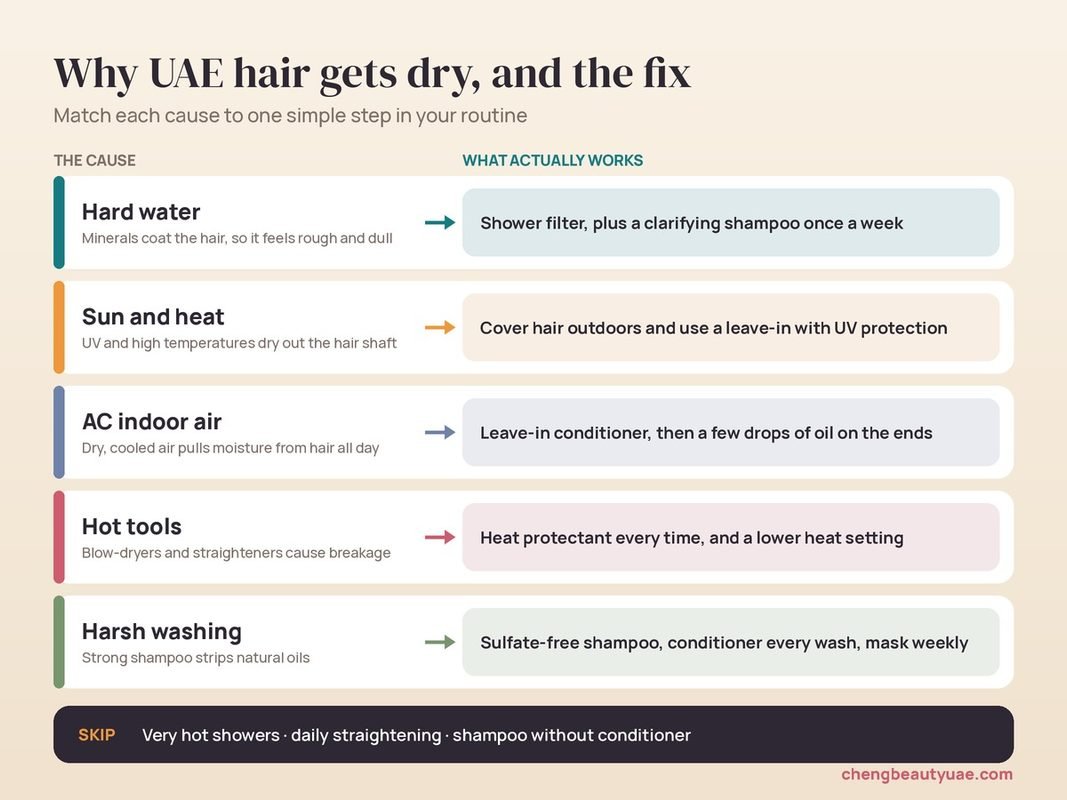
Your hair is dry when it loses moisture and the natural oils from your scalp can’t keep the strands soft. In the UAE, several things work against your hair at the same time, and most people blame only one of them.
Hard Water and Desalinated Tap Water
Most tap water in Dubai and Abu Dhabi is desalinated seawater, and the government says it’s safe for drinking and washing. Many residents still blame it for dry, brittle hair, and the research is mixed.
A 2018 study in the International Journal of Trichology tested hair from 70 men and found that hair treated with hard water had lower tensile strength than untreated hair, which means it broke more easily. An earlier, smaller study found no clear effect. So water may play a part, but it’s rarely the only reason your hair feels like straw.
Heat, Sun and Air Conditioning
Strong sun can weaken the outer layer of your hair over time, especially if you spend time outdoors without covering it. Indoors, air conditioning runs for most of the year and keeps the air dry. Your hair moves between hot sun and cold, dry air every day, and that constant change leaves it thirsty.
Heat Styling, Color and Rebonding
Blow-drying, flat irons, hair color and rebonding all change the structure of the hair strand. Chemically treated hair loses moisture faster and needs more conditioning than untreated hair. If your hair is rebonded or colored, everything in this guide matters even more.
Washing Too Often
Washing every day with a strong shampoo strips the oils your hair needs. In the heat, many people wash daily because their scalp feels sweaty, but dry lengths often need less washing, not more.
How to Tell If Your Hair Is Dry or Damaged
Dry hair and damaged hair often show up together, but they aren’t the same. Dry hair lacks moisture. Damaged hair has broken or weakened strands. These signs help you tell what you’re dealing with:
- Hair feels rough or straw-like, even right after washing.
- It frizzes quickly, especially when you step from AC into humid air.
- The ends look dull, thin or split.
- It tangles easily and snaps when you comb it.
- It takes a long time to feel soft after conditioner, or never does.
If you have only the first two signs, your hair is mostly dry and responds quickly to a better routine. If you see breakage and split ends, the damaged ends won’t fully repair, but a good routine stops it from getting worse while the new hair grows in healthy.
Dry Hair Treatment That Actually Works: A Simple Routine
If you’re wondering how to fix dry hair, the most effective dry hair treatment is a consistent routine: gentle cleansing on the scalp, conditioner after every wash, a weekly treatment and less heat. The American Academy of Dermatology gives similar advice in its hair care tips, including putting shampoo on the scalp and using conditioner after washing.
Step 1: Shampoo the Scalp Only
Massage shampoo into your scalp, where the oil and sweat are, and let the foam run through the lengths as you rinse. Scrubbing the ends directly dries them out. If your hair is very dry, try washing every two or three days instead of daily, and rinse with plain water in between if your scalp feels sweaty.
Step 2: Condition After Every Wash
Conditioner is the single most important step for dry hair. Squeeze the water out of your hair first, then apply conditioner to the mid-lengths and ends, leave it for two to three minutes, and rinse with cool or lukewarm water. If your hair is dry from root to tip, you can take it a little higher, but keep it off the scalp if your roots get oily.
Step 3: Add a Weekly Treatment
Once a week, give your hair extra moisture with a hair mask or a rinse-off treatment, and leave it on longer than your usual conditioner. The Keratin Plus Brazilian Hair Treatment is a rinse-off treatment with argan and jojoba oil that you apply after shampooing and leave for one minute, or a little longer once a week for very dry hair. It isn’t a salon straightening treatment, just a conditioning step.
Step 4: Dry and Style Gently
How you handle wet hair matters as much as the products you use:
- Pat your hair dry with a towel or an old cotton T-shirt instead of rubbing it.
- Detangle with a wide-tooth comb, starting at the ends and working up.
- Let your hair air-dry when you can, and use low or medium heat when you can’t.
- Use a heat protectant before a flat iron or curling iron.
- Cover your hair with a hat, cap or scarf when you’re in direct sun for long periods.
What to Look for in a Shampoo and Conditioner for Dry Hair
The best shampoo for dry hair cleans your scalp without leaving your lengths feeling squeaky, and the best conditioner for dry hair leaves them soft and easy to comb. You don’t need to memorize long ingredient lists, but these are worth knowing:
| Ingredient | What it does for dry hair |
|---|---|
| Butters and oils, such as cocoa butter or argan oil | Soften the feel of rough, dry strands |
| Panthenol (pro-vitamin B5) | Helps hair hold moisture |
| Conditioning agents, such as behentrimonium chloride | Smooth the surface, reduce static and make combing easier |
| Fatty alcohols, such as cetearyl alcohol | Add slip and softness (these are not the drying kind of alcohol) |
| Silicones, such as dimethicone | Coat the strand to reduce frizz and protect from friction |
A shampoo for frizzy hair follows the same rules: moisture, smoothing and a conditioner that coats the strand. If your hair is very dry or chemically treated, a sulfate-free shampoo is often gentler, though many people with dry hair do well with a regular shampoo as long as they use it on the scalp and always follow with conditioner.
Bremod Cocoa Butter Shampoo and Conditioner: An Honest Look
Bremod is a hair care brand that’s popular in the Philippines, and its Cocoa Butter range is made for dry, coarse, colored or heat-styled hair that needs moisture more than volume. The Bremod Cocoa Butter Shampoo and Conditioner set includes both 400ml bottles for AED 40.50.
The shampoo combines cocoa butter with panthenol, chamomile flower water and tea tree leaf oil, and it uses sodium laureth sulfate for cleansing. You can also buy the Bremod Cocoa Butter Shampoo 400ml on its own for AED 22.50.
The conditioner is the real moisture step. It pairs cocoa butter with panthenol, hydrolysed wheat protein, behentrimonium and steartrimonium chloride, cetearyl alcohol and dimethicone. The Bremod Cocoa Butter Conditioner 400ml is also AED 22.50 if you only need a conditioner for your current shampoo.
Two honest notes before you buy. The shampoo contains sulfates, so if you want a sulfate-free routine, pair only the conditioner with a sulfate-free shampoo. The conditioner contains methylparaben and propylparaben, which matters if you avoid parabens. If neither is a concern, the set is a good-value daily routine for dry, rough or frizzy hair.
Mistakes That Make Dry Hair Worse
Some common habits undo all the good your products do:
- Skipping conditioner because your hair feels “clean enough” after shampoo.
- Washing with very hot water, which feels good but strips more oil.
- Brushing wet hair hard from the roots down, which snaps weak strands.
- Using a flat iron daily without heat protection.
- Changing products every week, which never gives a routine time to work. Give a new routine three to four weeks.
- Ignoring your scalp, because a scalp that’s tight, flaky or itchy can be a separate problem from dry lengths.
The UAE climate affects your skin in similar ways, and if you’ve struggled with that too, our guide on skincare that actually works in the UAE covers it.
When to See a Dermatologist
Most dry hair improves with a better routine within a few weeks. See a dermatologist if your scalp is red, very itchy or heavily flaking, if you notice sudden or patchy hair loss, or if your hair stays brittle and keeps breaking even after a month of gentle care. These can point to a scalp condition or a health issue that shampoo and conditioner won’t fix.
Where to Buy Dry Hair Products in the UAE
You can find Bremod, Keratin Plus and other hair care products at Cheng Beauty UAE, where we sell genuine, sealed products with delivery across the Emirates, usually within one to two days. Delivery is AED 15 in standard areas, free on orders over AED 250, and cash on delivery is available.
Frequently Asked Questions
What is the best dry hair treatment at home?
The best dry hair treatment at home is a routine, not a single product: shampoo only your scalp, use conditioner after every wash, add a weekly mask or rinse-off treatment, and limit heat styling. Most people see softer hair within three to four weeks.
Why is my hair so dry in the UAE?
Hair gets dry in the UAE because of a mix of strong sun, air conditioning, frequent washing, heat styling and, for some people, tap water. Chemically treated hair, such as rebonded or colored hair, dries out even faster.
Does Dubai water damage hair?
Dubai’s desalinated tap water is approved for drinking and washing, but some research suggests hard water can make hair weaker and easier to break. Water is rarely the only cause, so a good conditioning routine matters more than the water itself.
How often should I wash dry hair?
You should wash dry hair only as often as your scalp needs it, which for many people is every two to three days. On the days in between, rinse with water if your scalp feels sweaty.
Should I use conditioner every time I wash my hair?
You should use conditioner after every wash if your hair is dry. Apply it to the mid-lengths and ends, leave it for two to three minutes, and rinse with cool or lukewarm water.
Is Bremod shampoo good for dry hair?
Bremod Cocoa Butter Shampoo is made for dry, coarse, colored and heat-styled hair, and it contains cocoa butter and panthenol. It works best paired with the matching conditioner, and it contains sulfates, which matters if you want a sulfate-free routine.
Can dry, damaged hair be repaired?
Dry hair can be restored with moisture, but split and broken ends can’t be fully repaired. A gentle routine softens your hair and stops further damage, and trimming the ends removes the parts that are already broken.
What should I look for in a shampoo for frizzy hair?
A shampoo for frizzy hair should clean gently and work with a conditioner that contains smoothing ingredients such as panthenol, butters, oils or silicones. Conditioning after every wash does more for frizz than the shampoo alone.